U.S. Treasury Signals Policy Shift on Crypto Mixers: Privacy, Compliance and the Next Phase of Blockchain Oversight
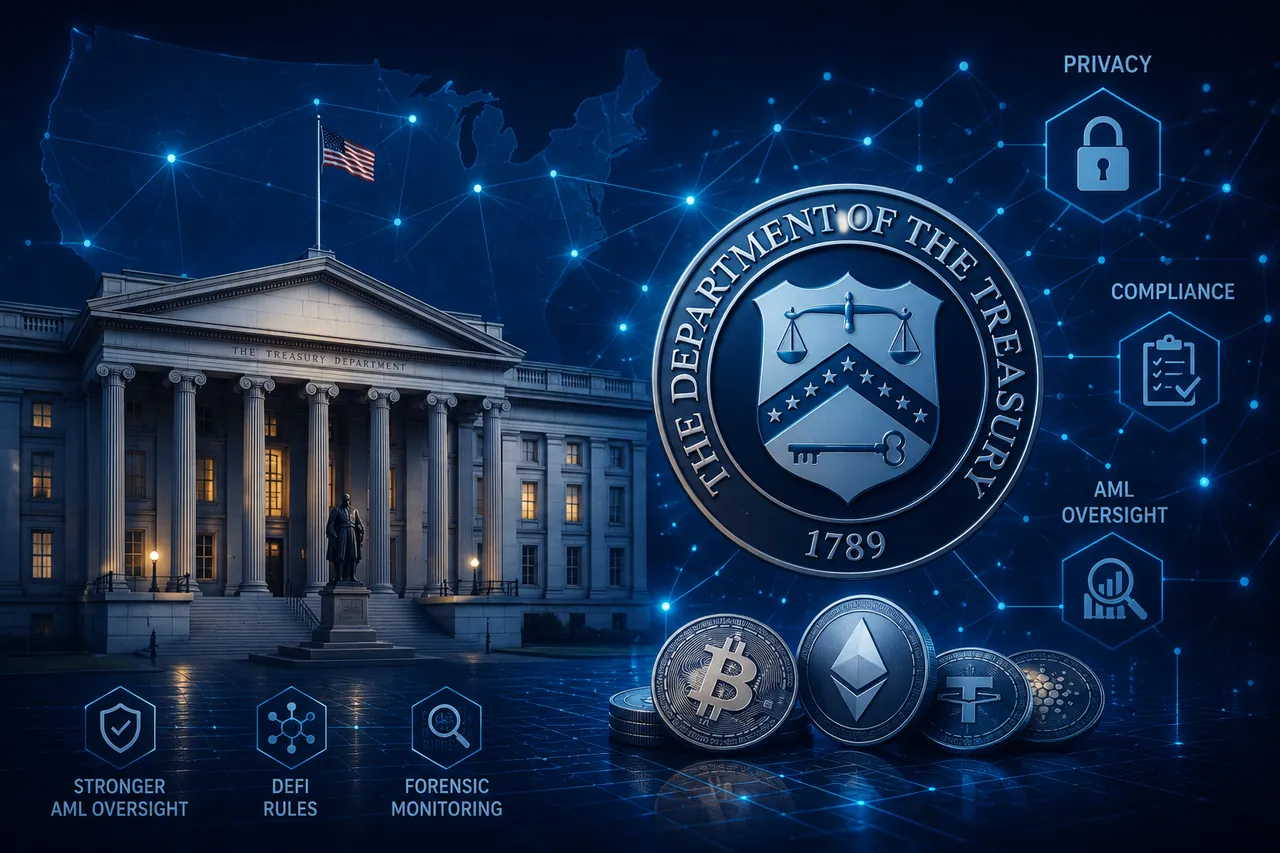
By Iraklis Anastasiou · January 30, 2026
The debate surrounding cryptocurrency mixing services has long been framed in stark terms: either as tools for crime and illicit finance, or as mechanisms for protecting financial privacy. A recent report from the U.S. Treasury suggests the conversation is beginning to mature.
In its submission to Congress, the Treasury acknowledged that crypto mixers, services designed to anonymize and obscure blockchain transaction trails, can serve legitimate privacy needs for users operating within the law.
The development represents a subtle but important shift in tone from previous enforcement-first approaches that targeted mixers such as Tornado Cash. Instead of treating privacy technologies as inherently suspect, regulators are beginning to recognize a more nuanced reality.
Recognizing Lawful Uses of Crypto Mixers
The Treasury report highlights that mixers may lawfully be used to protect sensitive financial information on public blockchains. Individuals and organizations may rely on such tools to shield the visibility of their balances, counterparties, and transaction histories.
However, this recognition is conditional. According to the Treasury's guidance, mixers could be considered legitimate when paired with safeguards such as record-keeping requirements, compliance protocols, and the ability to support investigations when necessary.
This "conditional legitimacy" effectively establishes a regulatory exception: privacy tools themselves are not unlawful, but their design and operation must support accountability and traceability when required.
For blockchain developers and service providers, this implies that privacy features must be architected with compliance in mind, a paradigm often described as "privacy with auditability."
Congress Faces Pressure to Clarify DeFi AML Obligations
Alongside acknowledging legitimate uses for mixers, the Treasury urged Congress to address several regulatory gaps in the decentralized finance (DeFi) ecosystem.
One major recommendation is to clarify which DeFi participants (such as developers, validators, front-end operators, or governance bodies) should be subject to anti-money laundering (AML) obligations.
Current frameworks were largely designed for centralized financial intermediaries. As DeFi protocols operate through distributed software and autonomous smart contracts, determining regulatory responsibility becomes significantly more complex.
By clarifying AML expectations for DeFi actors, regulators aim to ensure that decentralized platforms do not become systemic blind spots in the global financial system.
Advancing Privacy-Preserving Digital Identity
Another key element in the Treasury's recommendations is the development of privacy-preserving digital identity tools. These technologies could allow users to prove compliance with regulatory requirements without exposing unnecessary personal data.
Zero-knowledge proofs and decentralized identity frameworks are frequently cited as potential solutions. Such systems allow users to verify attributes (e.g., being a verified customer or residing in a permitted jurisdiction) without revealing the underlying information.
For regulators, these tools may represent a path toward balancing financial surveillance concerns with civil liberties.
Considering New Powers to Freeze Suspicious Digital Assets
The Treasury report also proposed that lawmakers consider introducing a digital-asset "hold law."
This mechanism would allow financial institutions and service providers to temporarily freeze suspicious crypto transactions while investigations are conducted.
Such powers would mirror existing controls in traditional finance, where banks may halt transfers flagged by anti-money laundering systems.
However, implementing these capabilities in decentralized environments presents practical challenges. Unlike banks, DeFi protocols often lack centralized administrators capable of freezing funds.
This regulatory tension, between decentralized architecture and compliance enforcement, will likely remain a central policy debate in the coming years.
The Need for Forensic Vigilance in a Privacy-Enhanced Ecosystem
While regulators move toward acknowledging legitimate privacy tools, the risks associated with mixers remain substantial.
Blockchain analytics firms and law enforcement agencies have repeatedly observed illicit actors using mixers to launder proceeds from cyberattacks, ransomware campaigns, and cross-border sanctions evasion.
In this environment, forensic vigilance becomes critical. Effective oversight will require:
- Continuous blockchain transaction monitoring
- Cross-platform analytics capable of identifying obfuscation patterns
- Real-time alerting systems for suspicious activity
- Structured reporting frameworks aligned with AML compliance obligations
Monitoring must extend beyond centralized exchanges to include DeFi protocols, bridges, and privacy-enhancing services where illicit actors may attempt to obscure asset flows.
Without robust forensic capabilities, privacy-enhancing technologies could inadvertently create new blind spots for financial crime investigations.
Toward a Balanced Framework
The Treasury's evolving stance on mixers reflects a broader reality confronting regulators worldwide: blockchain transparency creates unprecedented visibility, yet it also raises legitimate concerns about financial privacy.
The policy path emerging in the United States suggests a balanced framework, one that neither bans privacy technologies outright nor allows them to operate without accountability.
Achieving that balance will depend on the strength of investigative infrastructure across the digital-asset ecosystem. In practice, this means deploying advanced blockchain analytics, establishing standardized compliance procedures, and ensuring that suspicious activity reporting mechanisms evolve alongside the technology.
The Treasury's recognition that crypto mixers can serve lawful purposes marks a notable shift in regulatory thinking. Yet the acknowledgment comes with clear expectations: privacy tools must coexist with accountability.
As policymakers work to define AML obligations for DeFi, advance privacy-preserving identity systems, and consider new powers to freeze suspicious assets, the role of forensic monitoring will only become more central.
In the emerging regulatory environment, privacy and transparency are no longer opposing forces. They are two pillars that must be engineered to coexist within a resilient and accountable blockchain ecosystem.
How Ondology Labs can help: Privacy-with-accountability depends on strong monitoring. We provide blockchain forensics and transaction monitoring plus independent blockchain auditing across chains and DeFi.
Related reading: The EU privacy-token ban · The GENIUS Act and digital-asset tax.